
Stay current
The law changed this morning. The right policy owner is alerted, the impacted policy is redrafted, and your team reviews it before it goes live.
From growing businesses to global supply chains, policyshift keeps every policy current, provable, and audit-ready.
Book a DemoTrusted by compliance teams at
The law changed this morning. The right policy owner is alerted, the impacted policy is redrafted, and your team reviews it before it goes live.
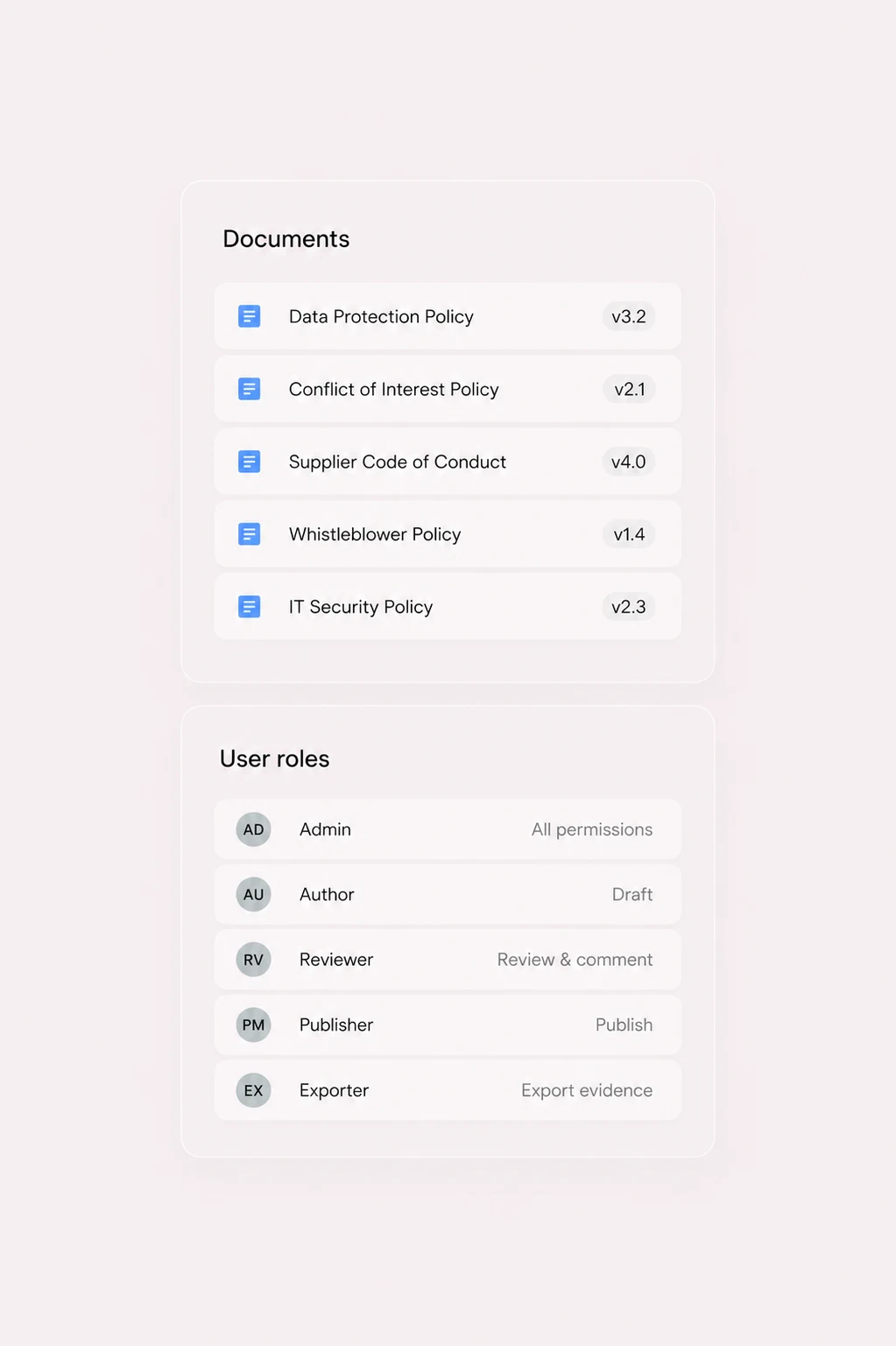
Every policy, every version, every owner, and every approval in one place. User roles make it clear who can draft, review, publish, and export evidence.
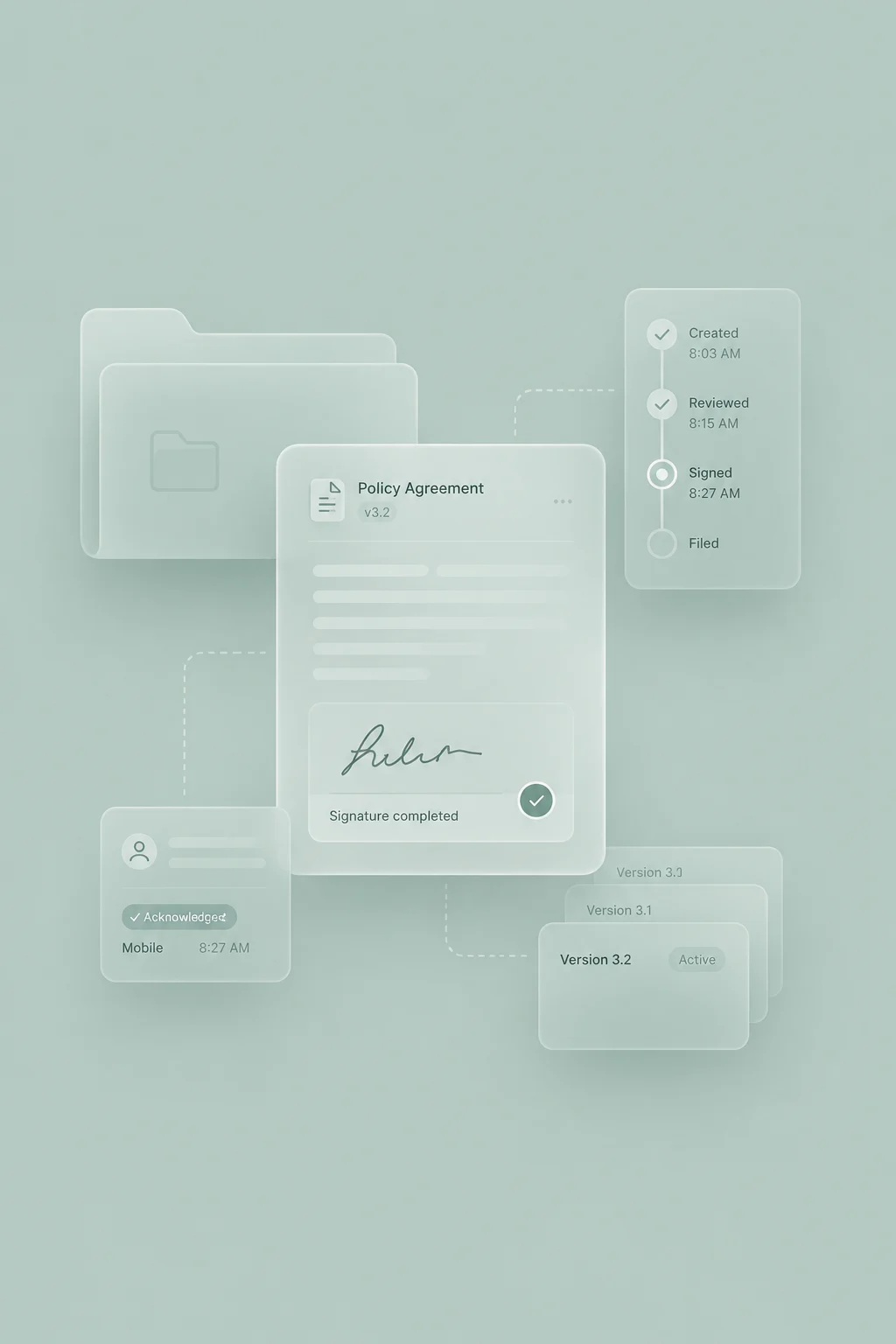
Every employee, every signature, every version - captured on desktop or mobile and ready the moment a regulator, tribunal, or customer asks.
Most businesses find out too late.
The law changed this morning. Your policies didn't. Tesco audits its tier-three suppliers every month - do you know if yours pass? A tribunal looks at the policy that was live on the day, not the latest draft in your folder.
The gap between your policy and the law grows quietly - until it doesn't. Old versions. Clashing documents. No clear owner. None of it shows up in a quarterly review. All of it shows up the moment something goes wrong.

Customer frameworks, supplier policies, and legislation across every country you operate in - compared, scored, and tracked in one system.

Validate policies against RFP requirements, verify suppliers against your standards, and build a defensible record of every decision.

Deliver faster diagnostics, structured updates, and ongoing advisory at scale across every client environment in your portfolio.

Create policies from scratch, manage reviews by role, evidence adoption across the organisation, and prove your compliance position on demand.
We watch UK and EU laws, regulator guidance, and tribunal rulings around the clock. Named owners can be alerted through policyshift, email, Slack, or Microsoft Teams.
One home for every policy, every version, every owner, and every approval. User roles control who drafts, reviews, publishes, distributes, and exports records.
Every employee, every policy version, every date. Recipients can review and acknowledge policies from desktop or mobile, with proof ready when it is needed.
Start with a guided first draft or update an existing policy. When the law moves, proposed redlines are generated for review before anything is republished.
Push policy frameworks across your supply chain. Capture sign-off and proof at every tier. Spot the gap before your customer's auditor does.
Build the audit pack - in any framework, for any date - in under a minute. Not last quarter. Now.
Less time spent preparing for an audit. Measured over the first year.
Full view of every policy across the business. Including the parts you couldn't see before.
From the day the law changes to the day every employee has signed the new policy.
Before policyshift, policy management at Vintage Wealth was slow and scattered. Now it's the part of the audit that finishes first.